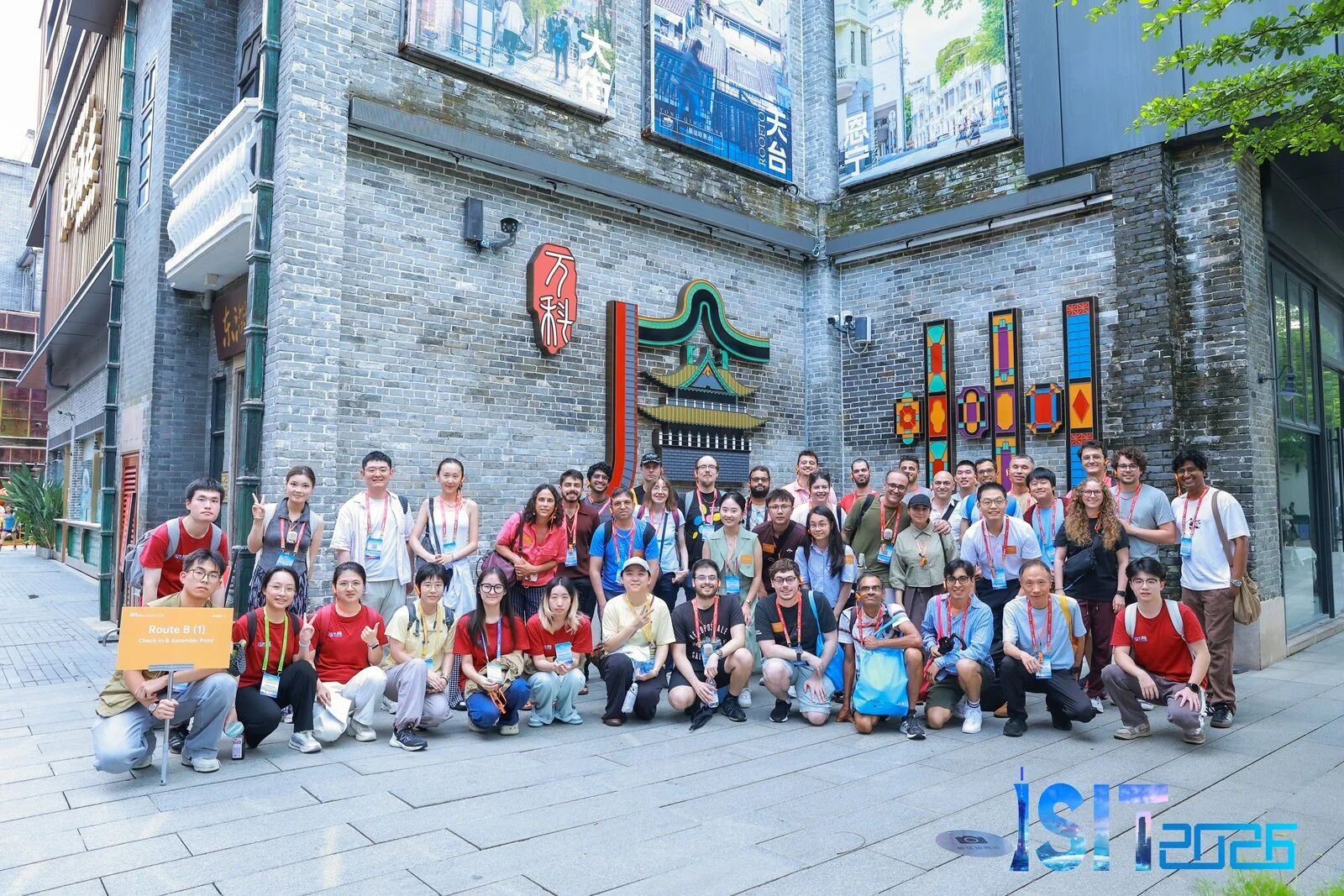


From June 28 to July 3, the 2026 IEEE International Symposium on Information Theory (ISIT 2026) was held in Guangzhou, marking the first time in its more than 70-year history that ISIT has taken place in the Chinese mainland.
Organised by the IEEE Information Theory Society and led by Sun Yat-sen University as the main local host, the conference brought together nearly 1,000 experts and scholars from around the world. Focusing on fundamental frontiers in information theory and interdisciplinary innovation, ISIT 2026 served as a high-level international platform for academic exchange, industry-university-research collaboration, and frontier research dialogue. AiScholar provided full technical support and service assurance throughout the conference, contributing to its smooth organisation and enabling vibrant academic exchange.
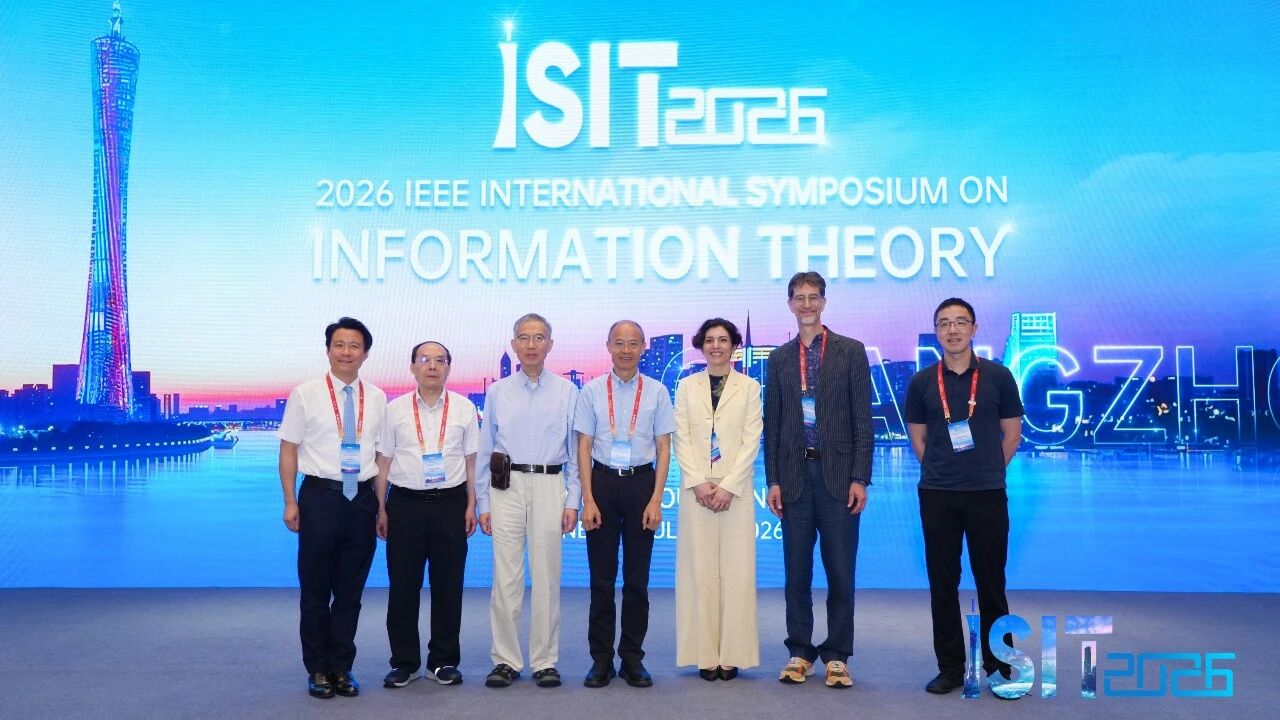
The Shannon Award: Known as the "Nobel Prize of Information Science"
Since its launch in London in 1950, ISIT has been held 58 times. Each year, the symposium invites that year's Claude E. Shannon Award recipient to deliver the prestigious Shannon Lecture and announces the recipient of the following year's Claude E. Shannon Award. The award is widely regarded as the "Nobel Prize of information science".
The arrival of ISIT in Guangzhou in 2026 is a milestone for the development of information theory in the Chinese mainland and for the cultivation of high-level talent in the field.
This year's conference delivered strong academic results. A total of 870 valid submissions were received from around the world, with 570 papers accepted. Scholars from China, the United States, the Netherlands, Australia, Germany, Italy, Russia, and other countries and regions attended the conference, with overseas participants accounting for more than 50% of all attendees.
The conference featured a distinguished line-up of keynote speakers. Professor Frans Willems of Eindhoven University of Technology, the 2026 Claude E. Shannon Award recipient, delivered the landmark Shannon Lecture. Other leading scholars and experts included Professor Wai Ho Mow of The Chinese University of Hong Kong, the first professor from a Chinese university to receive the Shannon Award; Professor Erdal Arıkan of Türkiye, the discoverer of polar codes for 5G; and Dr. Wen Tong, CTO of Huawei Wireless. They gathered in Guangzhou to share cutting-edge research and insights.
According to the organising committee, ISIT 2026 featured a rich and well-structured programme, including 144 technical sessions, seven tutorials, eight frontier academic workshops, three special academic forums, more than ten academic networking activities, and student competitions. The research programme covered core areas such as Shannon theory, coding theory, information security, signal detection, and estimation, while also highlighting interdisciplinary integration between information theory and artificial intelligence, machine learning, quantum information, DNA storage, bioinformatics, and other emerging fields.

International Scholars Praise China's Progress in Information Science
In an interview, Professor Frans Willems said he was "deeply impressed" by China's scientific research progress. He particularly noted the close collaboration between Chinese universities and industry.
"Academia can obtain real-world problems from industry, while companies can absorb fundamental theories from universities," Willems said, adding that this model is similar to the long-standing cooperation between companies and universities in the Netherlands.
Professor Erdal Arıkan reflected on the significance of the conference from both historical and developmental perspectives. "Over the past 20 years, information theory in China has reached an exceptionally high level. ISIT coming to the Chinese mainland for the first time is the natural result of this accumulated progress," he said.
He noted that around half of the papers submitted to and presented at this year's conference came from Chinese universities, making China the top contributing country by paper volume. This, he added, is also reflected in China's strong communications and artificial intelligence industries.
Professor Wai Ho Mow said it was highly significant for ISIT to be held in the Chinese mainland for the first time in more than 70 years. He expressed hope that the conference would attract more overseas scholars to China for academic exchange and further support the development of domestic disciplines. Speaking about the intersection of AI, quantum information, and information theory, he suggested that young Chinese scholars should promote closer collaboration among theoretical, applied, and experimental researchers to narrow the gap with leading international teams.
Professor Chen Li of Sun Yat-sen University: Talent Cultivation Is the Core Mission of Universities
"Information theory is the foundational theory underlying modern digital communications. With its early advantages from reform and opening up, a complete ICT industry cluster, and several universities deeply engaged in information theory research, the Guangdong-Hong Kong-Macao Greater Bay Area has become a core hub for information theory research in China. This is a key foundation for bringing ISIT to Guangzhou," said Professor Chen Li of the School of Electronics and Information Technology, also known as the School of Microelectronics, at Sun Yat-sen University.
Professor Chen believes the conference will drive a qualitative leap in information theory research, talent cultivation, and the information technology industry in China.
Looking ahead to long-term development after the conference, Professor Chen said, "The core mission of universities is talent cultivation. Building on this conference, the university will develop multi-level, long-term academic platforms covering key strengths such as information theory and coding under the first-level discipline of Information and Communication Engineering. At the same time, the international exchange channels established through the conference will create more opportunities for young scholars to engage globally and set higher research goals."
Industry experts noted that ISIT 2026's arrival in Guangzhou and its first-ever edition in the Chinese mainland strongly demonstrate the global academic community's recognition of China's strength in fundamental information science research. It is also a landmark achievement for Sun Yat-sen University as it enters its new century and advances towards the forefront of world-class universities.
By deeply connecting with the innovation and technology industry cluster of the Greater Bay Area, ISIT 2026 has strengthened communication and cooperation between academia and industry, supported the translation of frontier fundamental theories into real-world applications, fostered new quality productive forces in information technology, and further energised the region's academic innovation ecosystem.