


 ICBAR 2026 | Macau, China
As a leading role in the global megatrend of scientific innovation, We has been creating a more and more open environment for scientific innovation, increasing the depth and breadth of academic cooperation, and building a community of innovation that benefits all. Such endeavors are making new contributions to the globalization and creating a community of shared future.
2026 6th International Conference on Big Data, Artificial Intelligence and Risk Management (ICBAR 2026) will be held in Macau,China on December 10-12, 2026. Since the beginning of the 21st century, the progress of big data, artificial intelligence and risk management science has promoted the prosperity and development of the society and economy. Many universities and enterprises have developed many related technologies and products, and have achieved fruitful academic results and application transformation. The purpose of the conference is to provide experts, scholars, engineering technicians, and R&D personnel engaged in big data, artificial intelligence and risk management technology with a way to share scientific research results and cutting-edge technologies, understand academic development trends, broaden research ideas, strengthen academic research and discussion, and promote A platform for cooperation in the industrialization of academic achievements. The conference sincerely invites experts from domestic and foreign universities, scientific research institutions, scholars, business people and other relevant personnel to participate in the conference.
 Host

Committee
· International Advisory Committee ·

Prof. Weijia JIA
Beijing Normal-Hong Kong Baptist University
China
· General Chair ·

Prof. Wanlei Zhou
City University of Macau
Macao, China
· General Co-Chairs ·

Prof. Tianqing Zhu
City University of Macau
Macao, China

Prof. Pin-Han Ho
University of Waterloo
Canada
(IEEE Fellow)
· TPC Chairs ·

Assoc. Prof. Zuobin Ying
City University of Macau
Macao, China
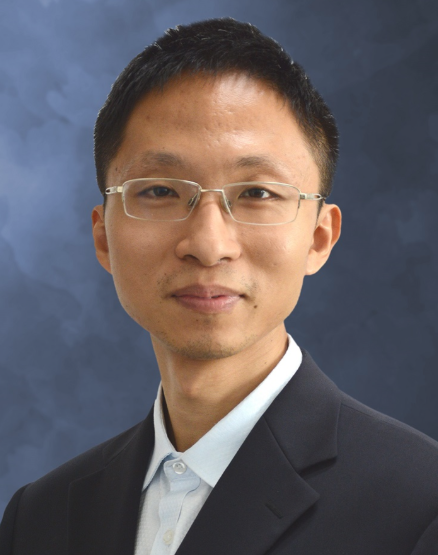
Prof. Jia Gu
City University of Macau
Macao, China

Prof. Iztok Humar
University of Ljubljana
Slovenia
(IEEE Senior Member)
· Program Chairs ·

Prof. Savas Konur
Aston University
UK
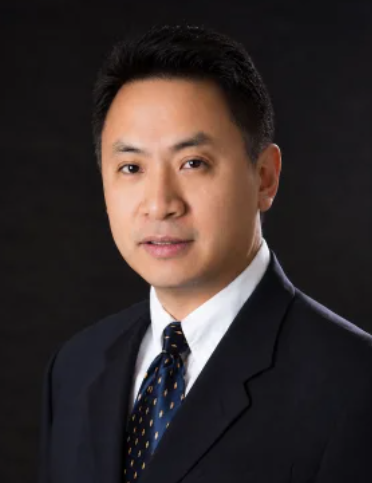
Prof. Dijiang Huang
Xi'an Jiaotong-Liverpool Univ.
China
(IEEE Senior Member)

Prof. Wenjing Xiao
Guangxi University
China
· Publicity Chairs ·

Assoc. Prof. Wenjian Liu
City University of Macau
Macao, China
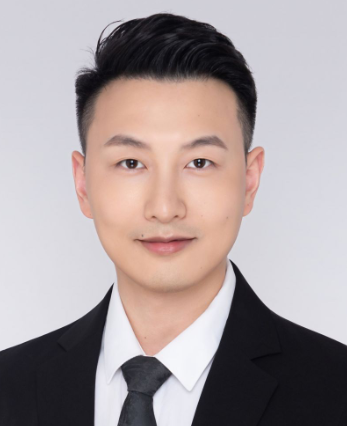
Asst. Prof. Chi Liu
City University of Macau
Macao, China
· Organizing Committee ·

Asst. Prof. Minghao Wang
City University of Macau
Macao, China

Asst. Prof. Xuhan Zuo
City University of Macau
Macao, China
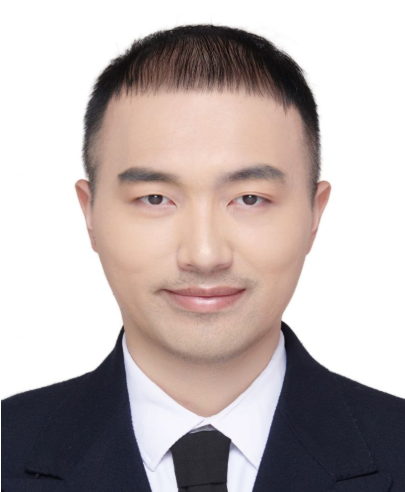
Asst. Prof. Jianping Cai
City University of Macau
Macao, China
Keynote Speakers

Prof. Zheng Yan
Xidian University, China
Distinguished Professor, IEEE Fellow, Member of Finnish Academy of Science and Letters, Member of European Academy of Sciences and Arts
Speech Title: AI-empowered Trust and Trustworthy AI
Abstract: While Artificial Intelligence (AI) is contributing to the advancement of human society, it also presents us with new challenges. Its trustworthiness is worthy of in-depth exploration. This talk elucidates the aids of AI for trust and indicates the problems of AI’s trustworthiness, especially potential attacks on AI and the factors that impact AI trust. I will summarize various attacks suffered by AI in its life cycle. In particular, I will introduce recent research achievements of my team, including LLM-aided trust evaluation, GNN-based robust and context-aware trust evaluation models, Large Language Model’s trust problems, a stealthy and practical audio backdoor attack with limited knowledge, LLM enhanced GNN robustness against poisoning attacks. Finally, several insights are proposed regarding AI trust management, especially an agentic system’s trust management.
Bio: Dr. Zheng Yan is currently a Distinguished Professor at Xidian University, China. She earned the Doctor of Science in Technology from Helsinki University of Technology. She is a Stanford World top 2% scientist, an Elsevier highly cited Chinese researcher, and a ScholarGPS World Top 0.05% Highly Ranked Scholar. Her research interests are in trust, security, privacy, and data analysis. She has published more than 480 papers in prestigious journals and conferences, with 300+ as the first or corresponding author. She has authored two English books, used for teaching for nearly a decade. She invented 220+ patents including 50 PCT patents, with more than 150 patents adopted by industry, most of them are solely invented by her. Some of these patents have entered international standards and widely used. She has received numerous awards, including the Nokia Distinguished Inventor, IEEE TCSC Award for Excellence, IEEE HITC Industrial Impact Award, IEEE TEMS Distinguished Leadership, N²Women Star in Computer Networking and Communications, three EU awards, two IEEE TC best journal paper awards, Shaanxi Natural Science Award, etc. She is currently a member of IEEE Fellow Committee. She serves as a Co-EiC of Information Sciences and an Area Editor/Associate Editor for 60+ esteemed journals. She founded the IEEE International Conference on Blockchain and serves as its Steering Committee Co-chair. She has contributed to more than 50 conferences as a General Chair or TPC Chair and delivered more than 60 keynotes and invited talks. She is a Fellow of IEEE and IET,a member of Finnish Academy of Science and Letters, and a member of European Academy of Sciences and Arts.

Prof. Celimuge Wu
The University of Electro-Communications, Japan
Professor, IEEE VTS Distinguished Lecturer, Foreign Fellow of EAJ, Fellow of AAIA
Speech Title: Lightweight Semantic Video Communications for Remote Driving
Abstract: The explosive growth of multimedia data, connected devices, and real-time intelligent applications is creating unprecedented challenges for existing communication infrastructures. Traditional systems that transmit raw or compressed data often suffer from high latency and inefficient use of bandwidth, particularly in delay-sensitive applications such as remote driving. Semantic communications offer a promising paradigm shift by focusing on conveying meaningful information rather than transmitting data itself. This talk introduces a novel low-latency video semantic communication framework for remote driving, based on an asymmetric encoder–decoder architecture. The framework extracts and transmits only essential semantic features, while generative AI at the receiver reconstructs high-quality, semantically consistent video. We also present a prototype implementation that integrates semantic feature extraction, efficient transmission, and AI-based video reconstruction, demonstrating the practical feasibility of the proposed approach. The talk further discusses the broader vision of integrating semantic communications, generative AI, and intelligent networking toward task-oriented, meaning-aware, and resource-efficient 6G systems, highlighting key challenges and future research opportunities.
Bio: Celimuge Wu received his PhD degree from The University of Electro-Communications, Japan. He is currently a professor and the director of Meta-Networking Research Center, The University of Electro-Communications. His research interests include Semantic Communications, Vehicular Networks, Edge Computing, IoT, and AI for Wireless Networking and Computing. He serves as an associate editor of IEEE Transactions on Networking, IEEE Transactions on Cognitive Communications and Networking, IEEE Transactions on Network Science and Engineering, and IEEE Transactions on Green Communications and Networking. He is a recipient of 2021 IEEE Communications Society Outstanding Paper Award, 2021 IEEE Internet of Things Journal Best Paper Award, IEEE Computer Society 2020 Best Paper Award and IEEE Computer Society 2019 Best Paper Award Runner-Up. He is an IEEE Vehicular Technology Society Distinguished Lecturer. He is a Foreign Fellow of The Engineering Academy of Japan (EAJ), and a Fellow of Asia-Pacific Artificial Intelligence Association (AAIA).

Prof. Sheng Zhong
Nanjing University, China
Professor and Dean, IEEE Fellow, CCF Fellow
Speech Title: "Don't Ask Carelessly!"--a preliminary study on security and privacy protection for LLM prompts
Abstract: Large language models have become powerful general-purpose interfaces, but careless prompting may expose users to serious privacy and security risks. A prompt may contain sensitive personal or confidential information, while malicious or toxic prompts may also induce unsafe model behavior through jailbreaking. This talk presents a preliminary study on protecting the security and privacy of LLM prompts from three perspectives. First, for text prompts, we study lightweight prompt privacy sanitization that can run locally on the user side. The key idea is to jointly measure the importance and privacy risk of each word, so that sensitive but task-irrelevant information can be replaced while preserving answer quality. Second, we extend the discussion to vision-language models, where uploaded images may contain private regions that are unnecessary for answering the user’s question. We introduce a utility-aware image sanitization strategy that protects private visual information while maintaining the accuracy of multimodal responses. Third, we examine jailbreak prompts through the lens of subtoxic questions and gradual attitude change, proposing the idea of a values shadow model for low-cost local evaluation and optimization of jailbreak-prompt strength. Together, these studies highlight the need for prompt-level protection mechanisms that are accurate, lightweight, interpretable, and compatible with existing LLM services.
Bio: Sheng Zhong received his B.S. and M.S. degrees from Nanjing University in 1996 and 1999, respectively, and his Ph.D. from Yale University in 2004. While working in the United States, he received the NSF CAREER Award and was granted early tenure. Since 2012, he has been a professor at Nanjing University, where he has served as dean since 2022. He is an IEEE Fellow and a CCF Fellow. His research interests include security, privacy, and economic incentives, with a particular focus on AI safety and privacy.
Call For Papers
Big Data & AI
- Data analysis & Data mining
- Modeling & Object detection
- Natural language processing (NLP)
- Data integration and visualization
- Open knowledge computing
- Artificial intelligence algorithms
- Distributed artificial intelligence
Risk Management
- Risk management systems
- Network security & Risk recognition
- Big data-driven management
- Risk and emergency governance
- Reliability engineering
- Epidemic risk management
- AI-based risk analysis
More topics, please click: https://2026.icbar.net/call_for_paper
Publication & Submission

ICBAR 2026 has passed IOS’s publication review, and accepted papers will be published in the IOS-Frontiers in Artificial Intelligence and Applications(ISSN: 0922-6389). And will be submitted to Ei Compendex and Scopus for indexing.
Submitted paper will be peer reviewed by conference committees, and accepted papers after registration and presentation will be published in the ICBAR 2026 conference proceedings.
Publication History
Download Template: AiScholar

Program
* The above program is a brief outline. A more detailed programme will be emailed to you after the registration deadline. The actual conference schedule may be a little different according to the number of participants.
Participation
- 01
Author Participation: one accepted article can have one author attend the conference for free, other authors can register separately.
- 02
Keynote Speaker: apply for a keynote speech, which will be reviewed by the organizing committee.
- 03
Oral Presentation: apply for an oral presentation, 10-15 minutes in duration.
- 04
Poster Display: apply for poster display, A1 size.
- 05
Audience Participation: no submission only participation, can also apply for speech and poster display.
Registration Fee
1. At least one author for each accepted final paper must pre-register.
2. The registration fee does not include: ① Accommodation ② Visa application fee ③ Transportation fare.
3. At least 30% of the registration fee will be charged as the service fee if you retract your paper for personal reasons.
Contact Us